For the Lord Himself will descend
from Heaven with a shout,
with the voice of an archangel,
and with the trumpet of God.
And the dead in Christ will rise first.
Then we who are alive and remain
shall be caught up together
with them in the clouds
to meet the Lord in the air.
And thus we shall ever be with the Lord.
1 Thessalonians 4:16-17, NKJV
In Peter's sermons and letters, he spoke of the Second Coming and the New Heavens and New Earth. James & John wrote about the coming of the Lord. Jude quoted the apocryphal Book of Enoch when speaking of the Lord's return. The Revelation gives a long and glorious description of Christ's return to earth at the end of the Great Tribulation in power and glory. But Paul is unique among the New Testament writers in his descriptions of the mysterious coming, the Rapture of the Church. Though Jesus taught his disciples for three and a half years, it seems that this particular New Testament revelation was reserved for the Apostle to the Gentiles, given to him only after Gentiles started receiving Christ as Savior.
Paul called himself a Hebrew of the Hebrews, born to the tribe of Benjamin, circumcised on the eighth day. Schooled at the feet of Gamaliel, Jerusalem's most celebrated teacher, Paul says that he excelled above all of his peers, followed the law blamelessly, and was zealous in his enforcement of it, which led to his personal vendetta against the church of Jesus Christ. Then one day while enroute to Damascus, Paul was blinded by the brightest light of heaven, knocked on his back in the dirt, and addressed by a powerful voice from the unseen.
"Saul, Saul, why are you persecuting me?" In this way, Paul met Jesus.
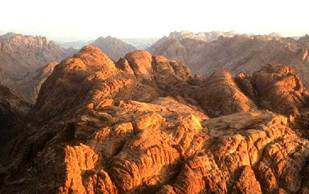
Three days later, healed of his blindness and full of the Holy Ghost, called to be God's Apostle to the Gentiles, he begins to preach the good news as Jesus had revealed it to him during those days of fasting and sightlessness. Rejected by the Jewish leaders and feared by the Christians, Paul spent three years in Syria and Arabia, and aside from a brief mention in the biographical account in Galatians, we know very little about that time in Paul's life. What was in Arabia? one might ask. A further reading of Galatians tells us that Mount Sinai was there--not the traditional site in what is now called the Sinai Peninsula, but rather the secluded mountaintop in Saudi Arabia that is today known as Jebel al Lawz. And why would Paul go there? one might ask. Because that's where Paul's predecessors and heroes of faith had often gone to meet with God. Moses met the Lord on Mount Sinai; Elijah met the Lord on Mount Sinai. Paul was going to do the same.
During the course of those years of obscurity, Paul communed personally with Jesus Christ, received multiple mysteries not revealed to any of the other Apostles (at least that they wrote about), and at least once was caught up to heaven, to the Paradise of God. And while the Apostle to the Gentiles is meeting with God on the mountain, Peter is bringing the first Gentiles into the church. It is no wonder that so many wonderful revelations were reserved until the believers finally opened themselves up to what God truly wanted them to do. And when Paul was finally recruited by Barnabas for the ministry in Antioch, he began to preach and teach the things he had received directly from the Lord, one of those mysteries being that of the Rapture of the Church.
The entirety of Paul's three week ministry in Thessalonica is summed up in four verses in Acts 17, leaving us no details except that some members of the synagogue were persuaded to follow Christ, but a great multitude of devout Greeks--including several leading women of the community--also believed. His two letters to that church make it clear that he spent alot of time talking to them about the return of Christ, the resurrection of the dead, the end of the age, and the promise of never dying but rather going in the Rapture. And then a riot puts an end to Paul's stay and he hurries down the road to Berea, Athens & Corinth. Concerned about the fledgling churches in Macedonia, Paul sends Silas and Timothy back to Philippi and Thessalonica, only to discover that the death of a believer in Thessalonica had caused a crisis of faith among the believers.
We thought you said we weren't going to die, they said.
We thought you said Jesus was coming back to get us before we died, they said.
Were you wrong? they asked. Did you lie to us? Were you mistaken in your revelation? And if Jesus does come back now, what about this one that has died? What will happen to them? Will they go too, or will they get left in the ground?
Interestingly enough, he will be asked the same thing by the Corinthian church in just a few years, and he will write it all over again in 1 Corinthians. But patiently taking their questions into consideration, Paul sits with Silas and Timothy and writes the letter we have now as 1 Thessalonians, in which he cannot write very many thoughts without coming back to the concept of the return of Christ, the resurrection, and the rapture. He spends half of chapter 4 & most of chapter 5 talking about it. And when more questions arise about the timing of that event and the erroneous belief that the Day of the Lord--God's time of wrath upon the earth--has already begun, Paul writes 2 Thessalonians, leaving us that great passage in chapter 2 on the rapture and the rise of the antichrist.
And in those 2 letters, Paul gives us 68 simple truths, 68 key facts regarding the return of Jesus Christ--the who, what, where, when, why & how of it. Those facts will reveal the Thessalonian key to understanding Paul's revelation of the Rapture of the church.
During the course of those years of obscurity, Paul communed personally with Jesus Christ, received multiple mysteries not revealed to any of the other Apostles (at least that they wrote about), and at least once was caught up to heaven, to the Paradise of God. And while the Apostle to the Gentiles is meeting with God on the mountain, Peter is bringing the first Gentiles into the church. It is no wonder that so many wonderful revelations were reserved until the believers finally opened themselves up to what God truly wanted them to do. And when Paul was finally recruited by Barnabas for the ministry in Antioch, he began to preach and teach the things he had received directly from the Lord, one of those mysteries being that of the Rapture of the Church.
The entirety of Paul's three week ministry in Thessalonica is summed up in four verses in Acts 17, leaving us no details except that some members of the synagogue were persuaded to follow Christ, but a great multitude of devout Greeks--including several leading women of the community--also believed. His two letters to that church make it clear that he spent alot of time talking to them about the return of Christ, the resurrection of the dead, the end of the age, and the promise of never dying but rather going in the Rapture. And then a riot puts an end to Paul's stay and he hurries down the road to Berea, Athens & Corinth. Concerned about the fledgling churches in Macedonia, Paul sends Silas and Timothy back to Philippi and Thessalonica, only to discover that the death of a believer in Thessalonica had caused a crisis of faith among the believers.
We thought you said we weren't going to die, they said.
We thought you said Jesus was coming back to get us before we died, they said.
Were you wrong? they asked. Did you lie to us? Were you mistaken in your revelation? And if Jesus does come back now, what about this one that has died? What will happen to them? Will they go too, or will they get left in the ground?
Interestingly enough, he will be asked the same thing by the Corinthian church in just a few years, and he will write it all over again in 1 Corinthians. But patiently taking their questions into consideration, Paul sits with Silas and Timothy and writes the letter we have now as 1 Thessalonians, in which he cannot write very many thoughts without coming back to the concept of the return of Christ, the resurrection, and the rapture. He spends half of chapter 4 & most of chapter 5 talking about it. And when more questions arise about the timing of that event and the erroneous belief that the Day of the Lord--God's time of wrath upon the earth--has already begun, Paul writes 2 Thessalonians, leaving us that great passage in chapter 2 on the rapture and the rise of the antichrist.
And in those 2 letters, Paul gives us 68 simple truths, 68 key facts regarding the return of Jesus Christ--the who, what, where, when, why & how of it. Those facts will reveal the Thessalonian key to understanding Paul's revelation of the Rapture of the church.


No comments:
Post a Comment